
Resources
Glossary: the terms behind Canadian content, controlled goods and metal.
Each term has a plain definition, the guide that explains it, and its source with the date.
Terms, A to Z.
B
- Buy Canadian Policy
-
The Government of Canada’s policy, in effect since 16 December 2025, for favouring Canadian suppliers, Canadian content and Canadian materials in federal procurement. It’s made up of a framework and three policies: one on Canadian materials, one on Canadian suppliers and Canadian content in strategic procurements, and one on reciprocal procurement.
- Buy request
-
The request CanadaFab sends metal suppliers for each job: the grade, form, size and quantity, cut to size, with mill certificates, and where to deliver it. Small orders go to cut-to-size suppliers and large projects to national service centres. CanadaFab tracks each supplier’s reply and records the price against the job.
C
- Canadian content record
-
The record CanadaFab issues with every CNC order, as evidence a buyer can use for Buy Canadian and ITB reporting. It lists the shop and its province, the labour, the metal with its heat number and its country of melt from the mill certificate, and the carrier on each leg. Each line comes from that step’s own evidence.
- Canadian content value (CCV)
-
The portion of a product’s or service’s value that involves Canadian costs, under the Industrial and Technological Benefits (ITB) Model Terms and Conditions. It’s calculated by the net selling price method, or by the cost aggregate method, which adds up Canadian-origin materials, Canadian labour, overhead and profit taxed in Canada. For purchase transactions, CCV verified at 70% or more for a reporting period is deemed 100% (section 7.3).
- Canadian supplier
-
Under the Buy Canadian Policy’s rules for strategic procurement, a supplier with a permanent place of business in Canada, registered and filing taxes here, with a registered address and staff or day-to-day business in Canada, that doesn’t subcontract abroad in a way that leaves little value added here. Canadian suppliers get a 10% price reduction for evaluation only, and 25% of the evaluation score goes to Canadian value added. The rules have covered strategic procurements of $5 million or more since 15 June 2026.
- Controlled goods
-
Goods, including components and technology, with military or national security significance, listed in the schedule to the Defence Production Act; they include blueprints and technical specifications on paper or in electronic form. Anyone who examines, possesses or transfers them in Canada must be registered in the Controlled Goods Program or be exempt. Public Services and Procurement Canada counts more than 4,000 registrants.
- Controlled Goods Program (CGP)
-
The Public Services and Procurement Canada program that registers the people and organizations who examine, possess or transfer controlled goods in Canada. Registration is free and lasts up to 5 years; the service standard is 32 business days, though the program’s page (modified 11 March 2026) says processing is taking significantly longer. Controlled work on CanadaFab is a plan: a controlled drawing would go only to a shop registered in the program.
- Country of melt
-
The country where the metal was first made from raw materials: where steel was melted and poured, or aluminum smelted and cast. Cutting or rolling it elsewhere doesn’t change it, so steel cut at a Canadian service centre keeps the country where it was melted. Since 31 July 2025, Canada has applied a 25% surtax to certain steel and aluminum goods imported with steel melted and poured, or aluminum smelted and cast, in China.
- Cut to size
-
Metal cut from bar, plate or sheet stock to the length or blank size a part needs, so the shop can start machining without sawing its own stock. Statistics Canada’s definition of metal service centres (NAICS 4162) notes that they may also cut metal to customer specification. CanadaFab has each job’s metal delivered to the shop cut to size, with its mill certificates.
F
- First article inspection (FAI)
-
A full, documented check of the first part from a new production process against every requirement on the drawing and specification, to show the process can make the part as designed. Aerospace and defence buyers can require it on the forms in SAE AS9102, whose revision C was issued on 28 June 2023. A change to a part’s design, process or source can call for a new or partial FAI.
H
- Heat number
-
The number a mill gives a heat, one batch of metal melted at one time. It’s marked on the product and printed on the mill certificate, so a bar or plate can be traced back to its chemistry, its tests and the mill that made it. ASTM A6/A6M-26a, for example, requires rolled structural steel bars, plates and shapes to be marked or tagged with it.
I
- Industrial and Technological Benefits (ITB)
-
The federal policy that contractually requires companies awarded defence procurement contracts to carry out business activity in Canada equal to the value of those contracts. Bidders also submit a Value Proposition, scored alongside the technical and cost requirements. Authority for the policy moved to the Defence Investment Agency on 16 July 2026.
M
- Machining-only request
-
The request CanadaFab sends partner shops, with one question: what the shop would charge to machine the job with the metal supplied, delivered cut to size with its mill certificates. The shop quotes machining only, since CanadaFab buys the metal. When a job is split across several shops by operation, each shop quotes only its own operations.
- Melted and poured
-
The test the federal Canadian Materials policy uses for steel: steel is Canadian only if it was melted and poured in Canada, along with the finished products made from it. Aluminum is Canadian if it was smelted and cast in Canada. The policy applies to defence goods and construction procurements of $25 million or more, taxes included, where $250,000 or more of a material is needed.
- Mill certificate
-
The document a mill issues with a lot of metal, giving its grade, heat number, chemical analysis and mechanical test results; in North America it’s often called a mill test report (MTR). The common type is the 3.1 inspection certificate in EN 10204:2004, validated by the maker’s inspection representative, who’s independent of manufacturing. Where a certificate states where the metal was melted, CanadaFab carries that country of melt onto the order’s content record.
N
- Notice to Exporters No. 1159
-
Global Affairs Canada’s guidance, modified 5 November 2025, on moving and storing controlled technology in the cloud under the Export and Import Permits Act. Storing it abroad is an export when there’s a reasonable possibility someone outside Canada could examine it, and accessing it from abroad needs a permit first. It asks for encryption key material held exclusively in Canada, under the control of a Canadian resident.
S
- Service centre
-
A metal distributor that buys from mills in volume, stocks bar, plate, sheet and tube, and sells to manufacturers, often cutting or processing the metal to order; for example Russel Metals and Samuel. Statistics Canada classes them as metal service centres, NAICS 4162: businesses mainly wholesaling metals and metal products. CanadaFab routes large projects to national service centres and small orders to cut-to-size suppliers.
- Small and medium business (SMB)
-
Under the ITB Model Terms and Conditions (section 1.1.41), a Canadian company with no more than 250 full-time employees, and no more than 500 counting its affiliated entities; agents and distributors of foreign goods and services don’t qualify. When a Canadian Company boost transaction goes to an SMB, its credit is multiplied by 2 (section 7.3.3.2.2). A boost transaction needs the SMB’s product or service to reach at least 70% Canadian content value (section 7.3.3.1).
T
- Technical data
-
Information used to design, make, use or repair a part, such as drawings, blueprints, specifications, models and CAD files. The schedule to the Defence Production Act makes technology for developing, producing or using many controlled goods a controlled good in its own right, and also covers goods made using US-origin technical data that’s a defence article under the US International Traffic in Arms Regulations. That’s why a controlled drawing needs the same care as the controlled part.
Buyer early access is coming soon.
Your name, work email, company and province. We’ll write when ordering opens in 2027. There’s no drawing or file on the form.
-
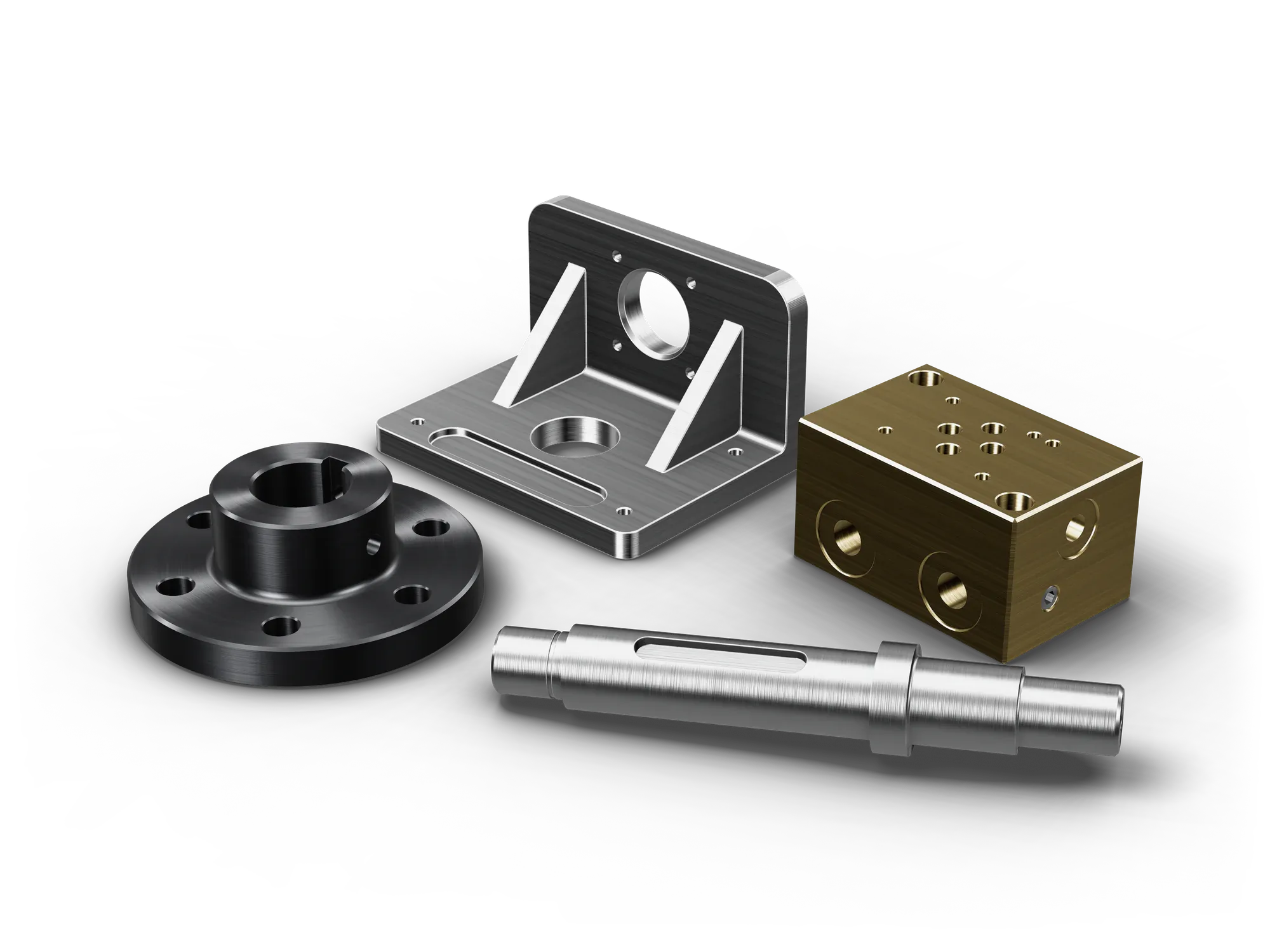
Machined parts
Custom CNC parts from your STEP files and drawings, with the metal, machining and freight on one quote.
Join buyer early access -
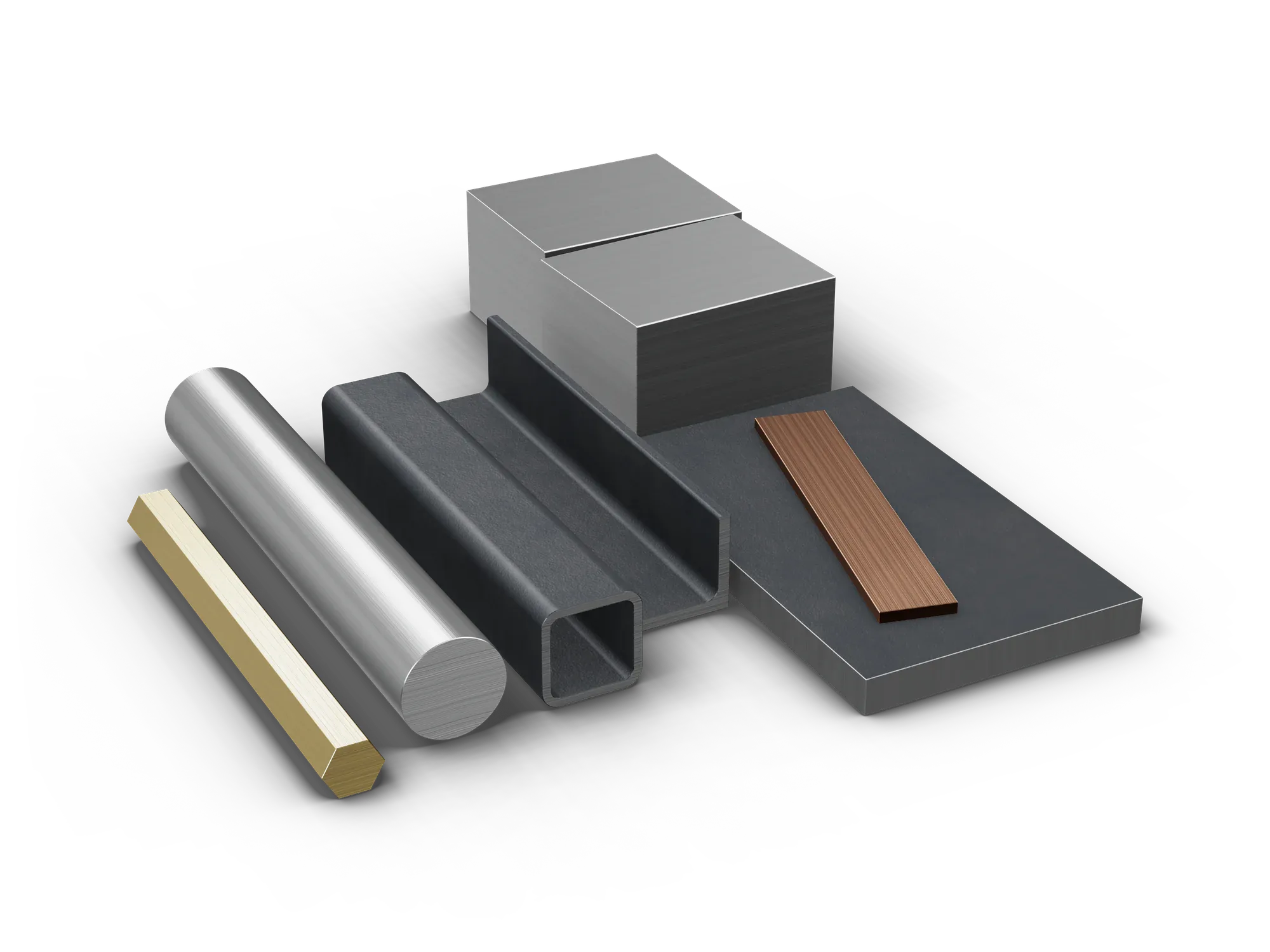
Metal for a project
Your list in your own words. We settle the exact request with you and send one offer with its delivery date.
Join buyer early access